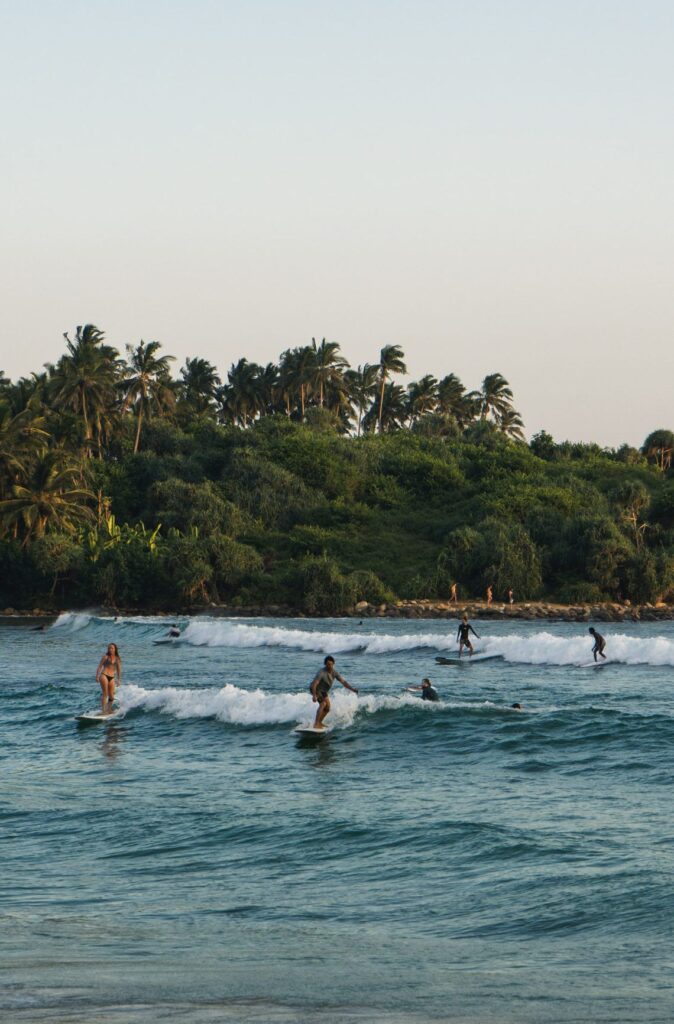
There’s a particular sound that stays with you long after you leave Sri Lanka. It’s the clatter of a two-stroke engine, the wind coming in from the left where the door used to be, and the coastal road unspooling ahead in a blur of palms and sea-light.
Travelling by tuk-tuk is easily one of the most memorable ways to experience the island. It puts you right at eye level with the culture, giving you the freedom to pull over for a fresh king coconut, take spontaneous detours down hidden dirt paths, or just soak in the sights and smells of the southern coast.
A tuk-tuk is not the most comfortable way to travel the southern coast. It is, without question, one of the most honest ones.
Before you arrive, two decisions shape everything: do you take the wheel yourself, or hire a local driver? Both routes are valid, and both lead to the same open-air freedom. The difference is in the preparation, the paperwork, and what kind of traveller you are.
This guide covers the costs, the legal requirements, the best routes from Hiriketiya Bay, and the safety habits that make the difference between a good story and a bad afternoon.
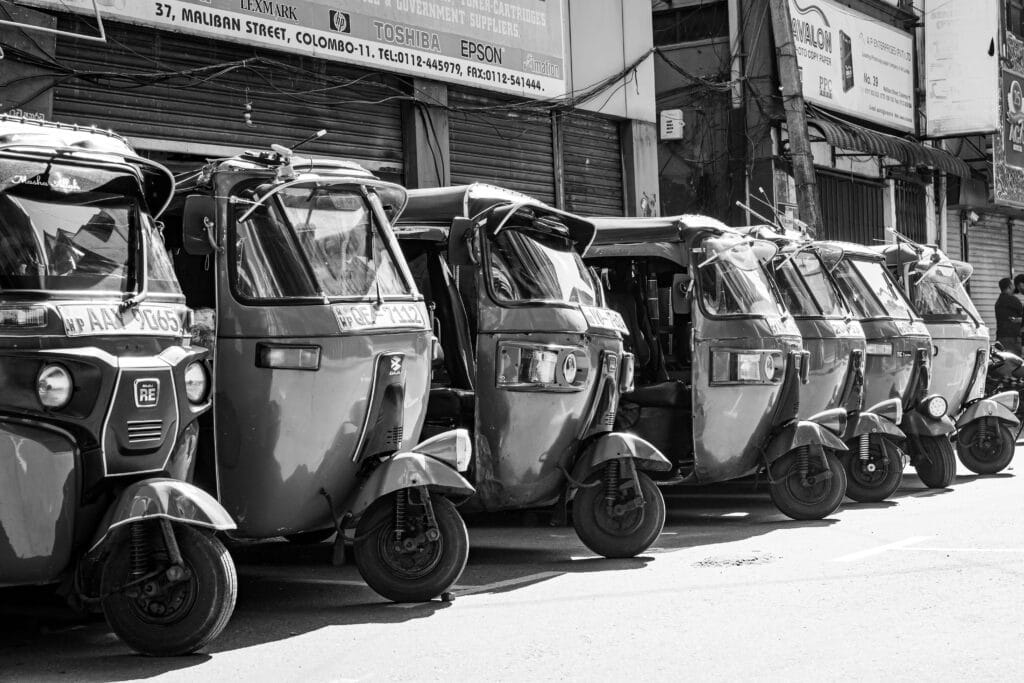
The tuk-tuk, also known as an auto rickshaw, is not just a mode of transportation in Sri Lanka; it is a cultural icon. These three-wheeled vehicles first appeared on the streets of Colombo in the late 1950s. Originally imported from Italy, the first models were Piaggio Ape C and Lambro, which were later replaced by Indian and Japanese versions. Over the decades, tuk-tuks have evolved from a practical solution to a familiar symbol of Sri Lankan street life. They are deeply embedded in the social fabric, representing a blend of innovation and tradition.
As you navigate the bustling streets of Colombo, Kandy, or Galle, you’ll quickly notice that tuk-tuks are everywhere. They have become an essential part of daily life for many Sri Lankans, offering a quick and convenient way to get around. For locals, tuk-tuks are a lifeline, providing employment opportunities and linking communities. For travelers, they offer a way to experience everyday Sri Lanka from a much closer perspective than you would from inside a car or bus. You move through narrow lanes, markets and neighbourhoods at street level, with the surroundings unfolding around you rather than behind a window.
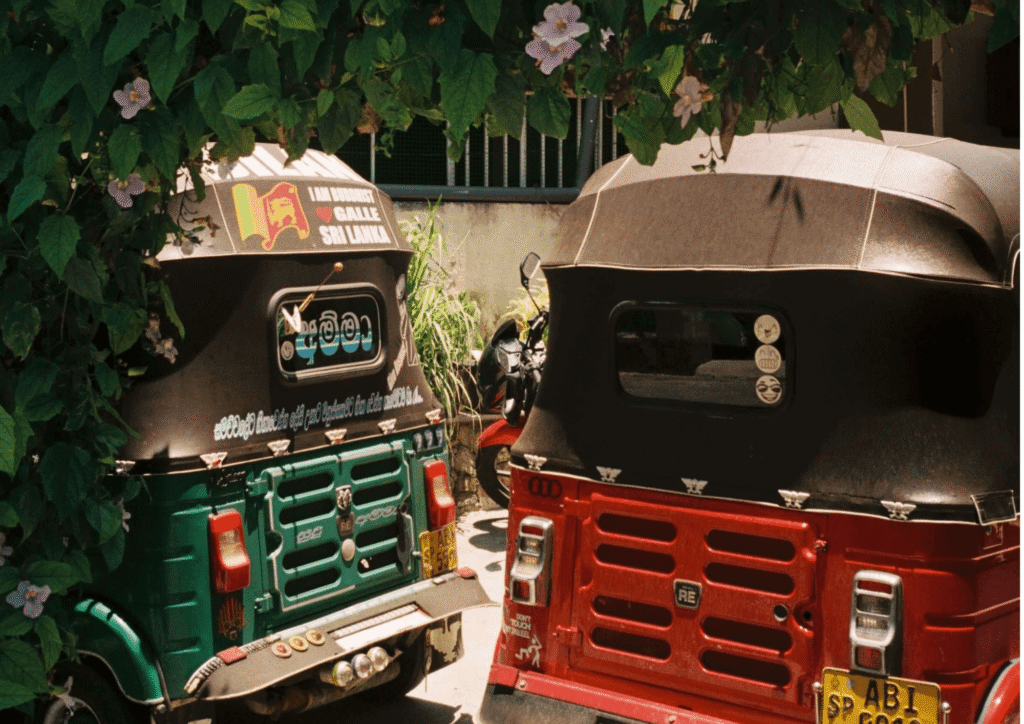
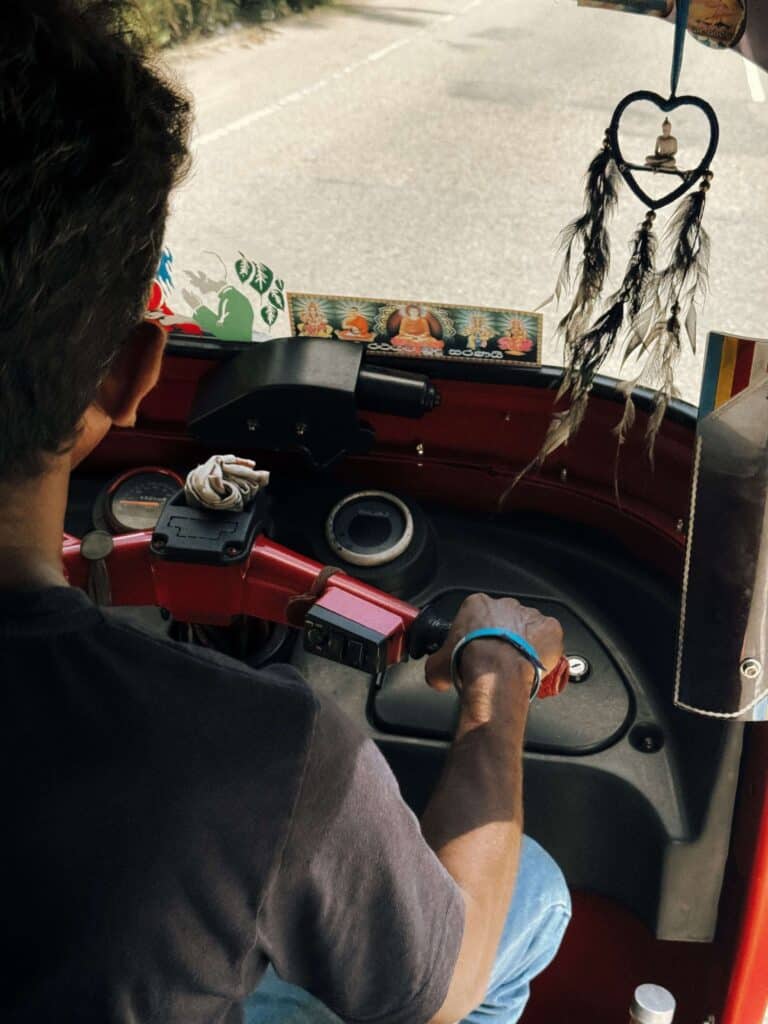
The cultural significance of tuk-tuks is also reflected in their unique and often colourful designs. Many drivers take great pride in customizing their vehicles, adorning them with vibrant decals, religious symbols, and even personal slogans. This customization is not just about aesthetics; it is a form of self-expression and a testament to the driver’s individuality. In a way, each tuk-tuk tells a story, offering a glimpse into the owner’s life and worldview.
So, when you hop into a tuk-tuk, you’re not just getting a ride; you’re stepping into a small, mobile canvas of Sri Lankan culture.
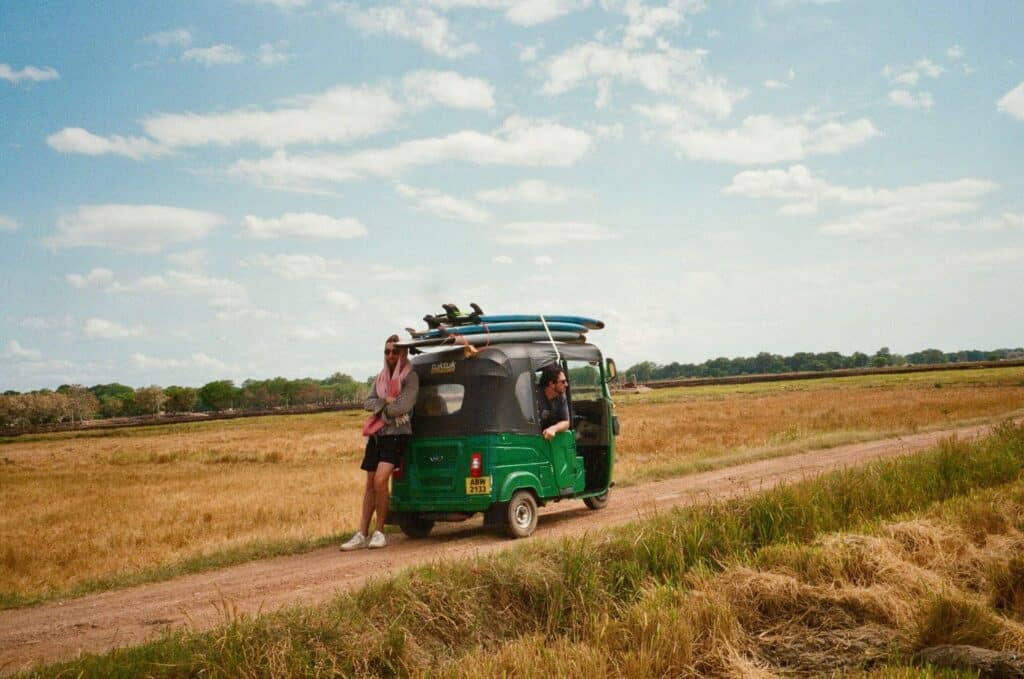
Opting for a tuk-tuk during your Sri Lankan adventure offers a different kind of flexibility from more conventional modes of transportation.
For starters, tuk-tuks are practical for exploring places where larger vehicles can be less convenient. They can navigate narrow streets and smaller roads, making it easier to reach beaches, villages, viewpoints and local stops that may sit away from the main routes. You are not tied to a fixed bus timetable or train schedule, and you can change your plans as you go.
That flexibility is particularly useful when travelling along the southern coast. You can stop for lunch, pull over at a viewpoint, spend an extra hour at a beach, or take a turn simply because the road looks interesting. The journey becomes part of the trip rather than just the way of getting from one destination to another.
Tuk-tuks also offer a more direct way of experiencing the places you travel through. The open sides mean that roadside shops, markets, temples, fields and villages are all part of the journey. You hear the traffic, smell the food cooking along the road and notice the smaller details that can easily disappear when travelling inside an air-conditioned vehicle.
Finally, tuk-tuks are relatively small and fuel-efficient compared with larger private vehicles. For travellers looking to keep their transport footprint modest, using a three-wheeler can be a practical choice while also supporting local drivers and rental businesses.
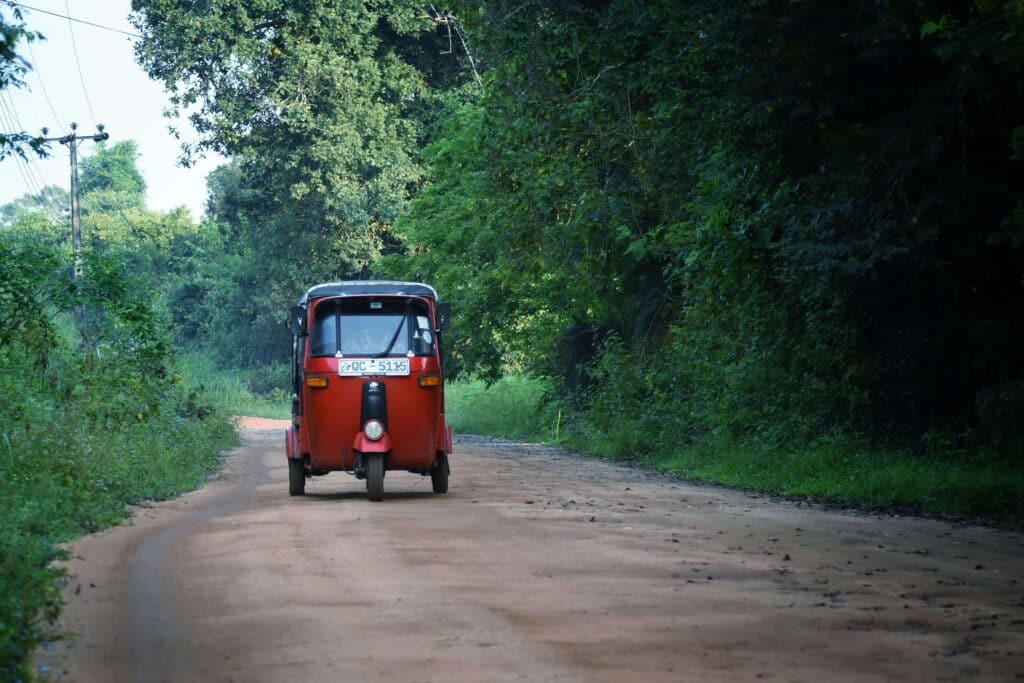
Before deciding how to explore Sri Lanka by tuk-tuk, consider whether you want to drive yourself or leave the driving to a local.
When Hiring a Local Driver Makes More Sense
For many travellers, the tuk-tuk experience is about the journey rather than being the person behind the wheel.
A local driver takes care of navigation, traffic and parking while you concentrate on the scenery. For longer journeys, an experienced driver may also know which roads are more convenient, where to stop for food, or how to adapt a route when weather or road conditions change.
This option can make particular sense for travellers without the documentation required for self-driving, those planning shorter coastal journeys, or anyone who simply wants to sit back and enjoy the ride.
It can also be useful if you’re travelling with luggage, planning several stops in one day, or visiting places where you would rather have someone familiar with the local roads take care of the driving.
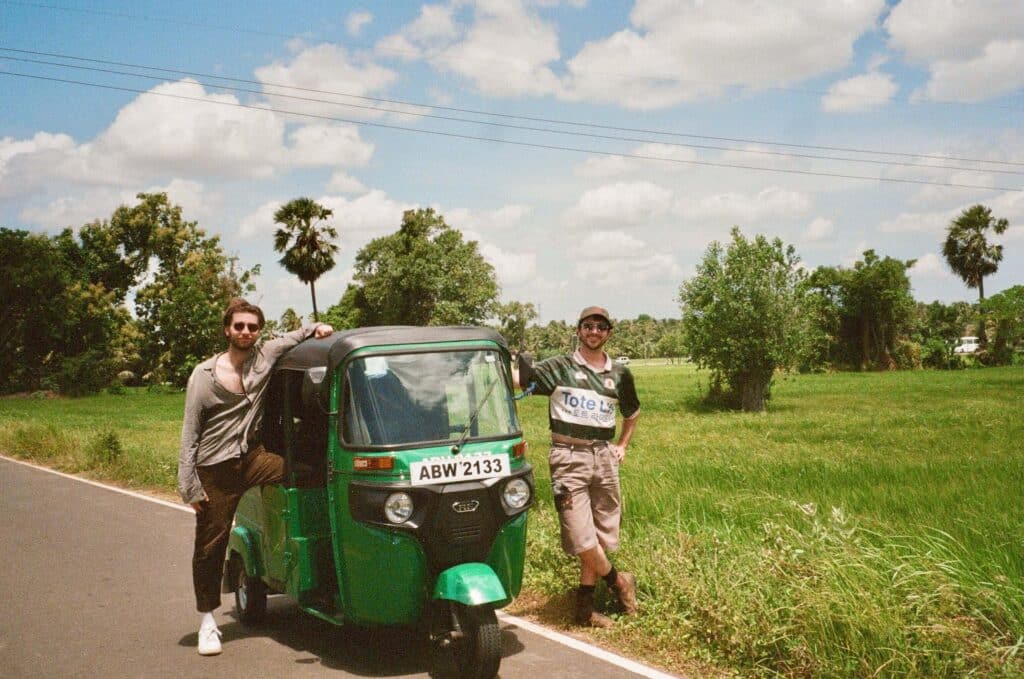
The Vibe: Absolute independence. You set the schedule, control the music, and steer your own adventure.
Best For: Confident drivers who are comfortable navigating on the left side of the road, don’t mind manual/twist-throttle driving, and are happy to organize their paperwork in advance.
What’s Included: Reputable self-drive companies handle your local driving permits, provide comprehensive insurance, and offer road support or vehicle swaps if anything goes wrong mechanically.
Self-drive gives you the most control over your itinerary, but it also comes with greater responsibility. You need to make sure your documentation is in order, understand the local road conditions, and be comfortable sharing the road with buses, lorries, motorbikes, cars and other tuk-tuks.
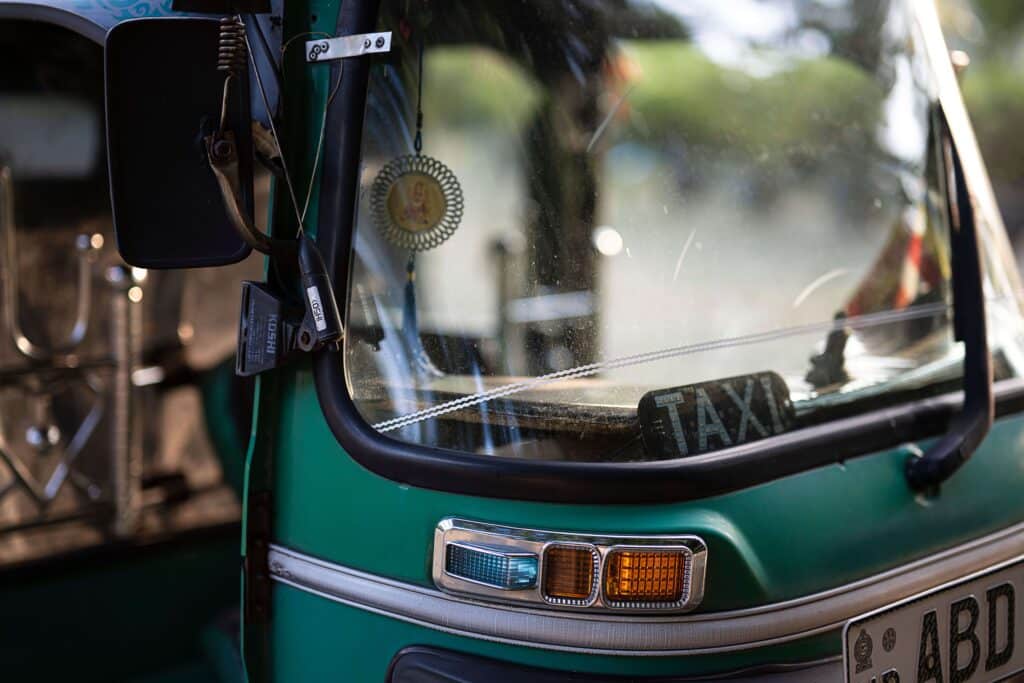
If you are not renting a tuk-tuk for several days or hiring a driver for a full itinerary, taking a tuk-tuk for individual journeys is one of the easiest ways to get around Sri Lanka.
In cities like Colombo and Kandy, you can often find tuk-tuks near bus stations, train stations and major tourist attractions. In smaller towns, they are usually parked along the main roads or near local markets. In tourist areas, you can also arrange short journeys through your accommodation.
Most tuk-tuks don’t have meters, so it’s important to agree on a fare before you begin the journey. Before approaching a driver, get a rough idea of the local price for your route by asking your accommodation, checking a ride-hailing app, or asking someone local. This gives you a realistic starting point for the negotiation.
Be clear about whether the fare is one-way or round-trip, particularly if you plan to wait while visiting somewhere or make several stops. If you are travelling a longer distance, confirm whether the agreed price includes waiting time, additional stops or tolls.
It’s also a good idea to have smaller notes available, as drivers may not always have change for larger bills.
In addition to street-hailing, apps such as PickMe and Uber offer tuk-tuk services in some parts of the country. These can provide fare estimates, driver information and a convenient way to arrange a ride without negotiating on the street.
Whether you hail a tuk-tuk or book through an app, the simplest protection against overcharging is knowing the approximate local rate and agreeing on the price before the journey begins.
Sri Lankan traffic police actively conduct document checks, and standard foreign licences or standard International Driving Permits (IDPs) alone are not legally sufficient to drive a three-wheeler.
To legally drive a self-drive tuk-tuk, you must carry three physical documents at all times:
Pro Tip
Obtaining the AAC Recognition Permit yourself requires visiting the AAC office in Colombo in person, which takes a few hours. Most top rental agencies will process this endorsement on your behalf before you arrive if you submit your documents online in advance.
Because licensing requirements and procedures can change, confirm the current requirements with your rental company and the Automobile Association of Ceylon before travelling.
Insurance & Safety Essentials
Insurance
Ensure your rental rate explicitly covers Comprehensive Commercial / Third-Party Insurance for self-drive three-wheelers.
Always keep physical copies of your rental agreement, insurance policy, and vehicle registration in the glove box alongside your licenses.
Expressway Ban
Tuk-tuks are legally prohibited from driving on Sri Lanka’s expressways, such as the E01 Southern Expressway. Tuk-tuks are also prohibited from the Colombo-Katunayake Expressway (E03).
Always configure Google Maps or Maps.me to “Avoid Tolls / Avoid Highways” before navigating so your route does not send you towards a road you cannot use.
Night Driving
Avoid driving long distances after dark. Coastal roads can be dimly lit, with unlit bicycles, stray dogs, and heavy vehicle traffic creating unnecessary hazards. Poor road lighting, free-roaming animals, unlit cyclists, and the general unpredictability of night-time traffic on rural Sri Lankan roads all combine to make unfamiliar roads more difficult to navigate after dark.
On-Road Habits That Matter
Keep your speed modest. Tuk-tuks are light vehicles and can become unstable quickly at higher speeds, particularly on uneven or wet roads. Around 30–40 km/h is a sensible range for many local roads, but always adapt your speed to the road, weather and traffic conditions.
Drive defensively and give buses and lorries generous room; they may not slow down or move around you in the way you expect.
Using the horn is a standard local driving custom. A light tap at a blind bend can signal your presence to other road users. It should be used as a communication tool rather than aggressively.
Overtaking on blind bends is a genuine risk on southern coast roads, and the consequences of misjudging it in a three-wheeler can be significant. If you cannot see what is coming, wait.
If something goes wrong mechanically, call the rental company rather than attempting a roadside repair. That is what the support line is there for.
Self-Drive Rental Costs
Self-drive tuk-tuk hire typically costs between $15 and $25 per day (approximately LKR 4,500–7,500), depending on the operator and rental duration.
At those daily rates, a seven-day rental would be roughly $105–175, although longer rentals may have discounted rates and some operators include additional services or fees.
Hired-Driver Costs
Hired-driver day rates in southern Sri Lanka run between LKR 6,000 and LKR 8,000 for a full sightseeing day.
Prices can vary depending on the distance, number of stops, duration, vehicle and whether fuel or waiting time is included, so confirm what is covered before setting off.
When booking a self-drive tuk-tuk, it’s vital to use verified operators that provide fully licensed vehicles, valid tourist permits, and road support.
TukTukRental.com: One of the popular platforms for international travellers. They source vehicles directly from local owners, giving back to the community, and handle your AAC driving permit, insurance, unlimited kilometres, and 24/7 roadside support.
WeTukTukRental: A local rental provider offering short- and long-term self-drive options, permit arrangements, and delivery options across major hubs.
Croos Tours: Based in Negombo, this can be convenient if you are picking up your vehicle immediately after landing at Bandaranaike International Airport before heading south.
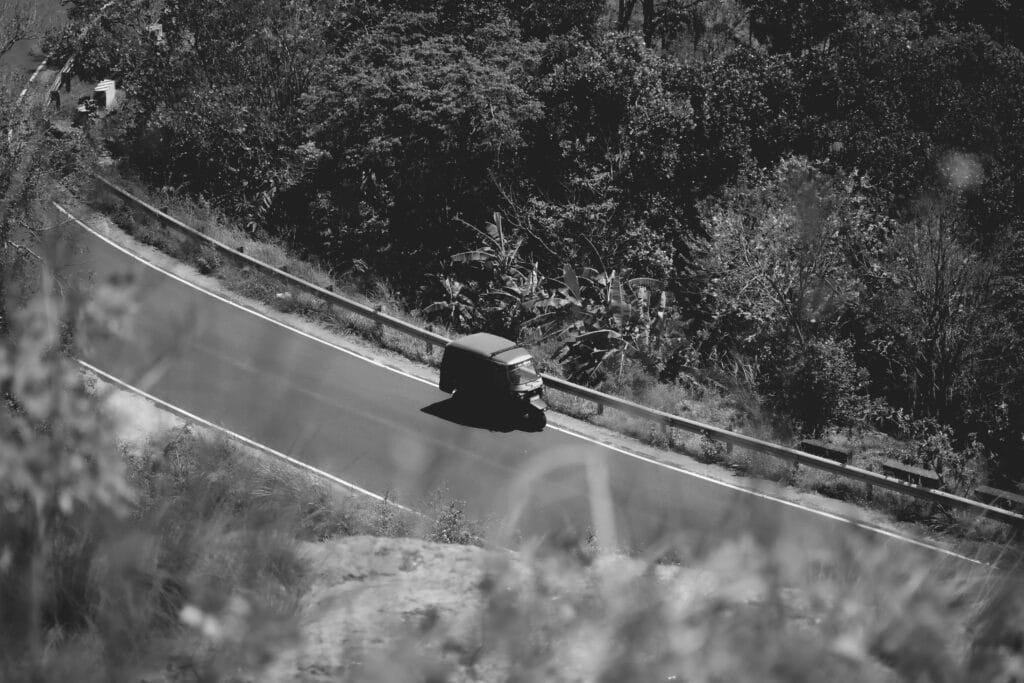
Exploring Sri Lanka by tuk-tuk offers a different perspective on both the southern coast and longer journeys across the island.
The Southern Coastal Road
One of the most popular routes is the journey from Colombo to Galle along the scenic coastal road. This route offers views of the Indian Ocean, picturesque beaches, and fishing villages. Along the way, you can stop at attractions like Bentota Beach, Hikkaduwa Coral Reefs, and the historic Galle Fort, a UNESCO World Heritage Site.
From Hiriketiya, you can also travel east or west along the coast, using the smaller roads to explore beaches and villages away from the main tourist centres.
The Cultural Triangle
For a longer island journey, the Cultural Triangle includes the ancient cities of Anuradhapura, Polonnaruwa and Sigiriya.
These locations are rich in history and archaeology, offering a glimpse into Sri Lanka’s ancient civilizations.
A tuk-tuk journey through this region allows you to move between heritage sites while experiencing the rural landscapes along the way. You can stop to explore ancient ruins, visit Sigiriya Rock Fortress and Dambulla Cave Temple, and take your time travelling between destinations.
The Hill Country
For nature enthusiasts, a tuk-tuk journey through the hill country offers a completely different landscape from the coast. Starting from the city of Kandy, you can travel through the winding roads of the central highlands, passing tea plantations, waterfalls and scenic viewpoints.
The route to Nuwara Eliya, often referred to as “Little England,” is particularly distinctive. Here, you can visit tea estates, explore the surrounding hills and take in the colonial architecture.
The cooler climate and lush greenery make this region a refreshing contrast to the tropical heat of the lowlands.
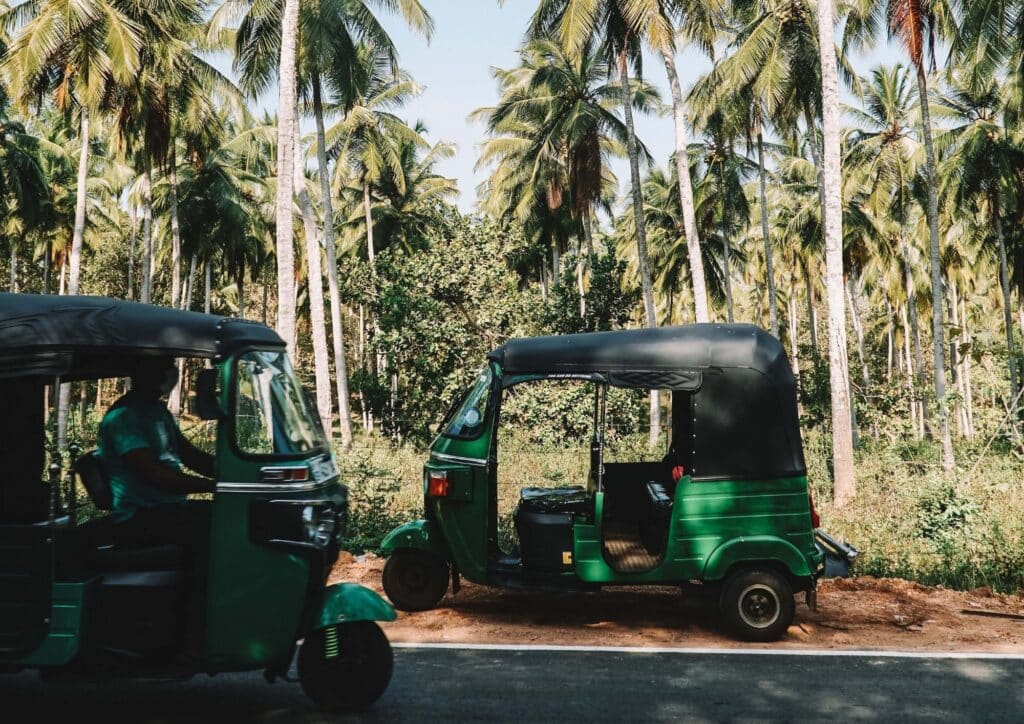
There is a version of Sri Lanka that you only access from the open seat of a three-wheeler: the smell of the coast before you see it, the temple that appears unexpectedly around a bend, the roadside fruit stall you would have driven straight past in a car.
That version of the island is worth slowing down for.
Whether you choose a self-drive tuk-tuk or a local driver, travelling by three-wheeler gives you the freedom to explore southern Sri Lanka at your own pace.
Sort the paperwork early. Know your rates before you negotiate. Keep your speed down. Stay off the expressways. And leave enough room in your itinerary for the unexpected.
Hiriketiya is a natural starting point for all of this. From here, roads lead east towards quieter beaches and coastal villages, west towards the surf towns and historic sites of the south, and inland towards a very different side of Sri Lanka.
If you’re staying at Salt House, the team can also help you arrange local transport, suggest routes and point you towards places worth exploring along the way.
Because sometimes the best part of the journey is simply deciding where to turn next.
Cheers!
Related
Events, Places
No results available
Stay turned